
Enhancing Aquarium Oxygenation: Beyond the Air Pump |
Discover effective methods to boost oxygen levels in your aquarium beyond using air pumps, ensuring a healthy environment for your fish. |
Maintaining optimal oxygen levels is crucial for the health and vitality of your aquarium's inhabitants.
While many aquarists rely on air pumps to achieve this, it's essential to understand the various methods available to enhance oxygenation effectively.
Understanding Oxygenation in Aquariums
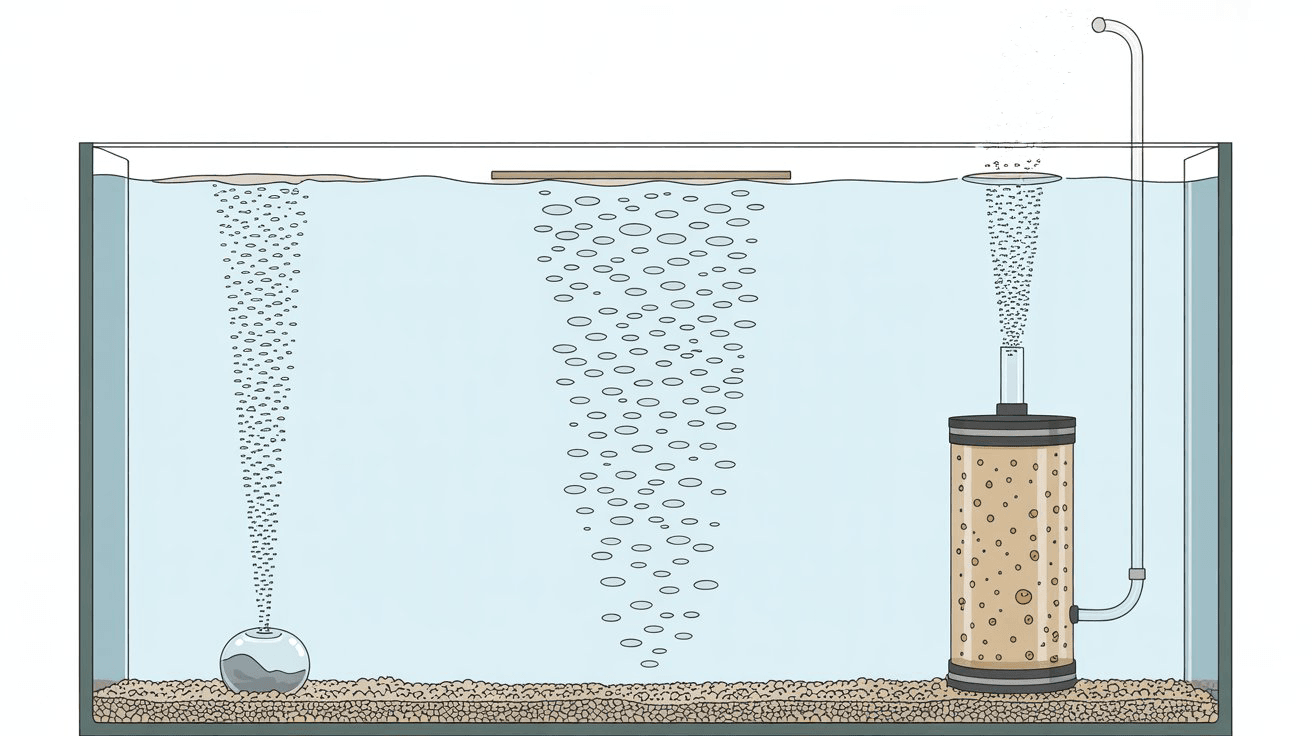
Oxygen enters aquarium water primarily through surface agitation, which facilitates gas exchange.
Contrary to common belief, the bubbles produced by air stones or air curtains do not directly infuse oxygen into the water.
Instead, as these bubbles rise and burst at the surface, they disrupt the water's surface tension, promoting the exchange of gases—oxygen enters, and carbon dioxide exits.
Alternative Methods to Increase Oxygen Levels
Beyond air pumps, several techniques can effectively enhance oxygenation:
1. Utilizing Filter Outputs and Powerheads
Devices such as power filters and canister filters often come equipped with spray bars or adjustable outputs.
By directing the flow towards the water's surface, these devices create agitation, thereby facilitating gas exchange.
Similarly, powerheads can be positioned to disturb the surface, enhancing oxygen dissolution.
2. Incorporating Live Aquatic Plants
Introducing live plants like Anacharis, Java Moss, or Amazon Sword can naturally boost oxygen levels.
Through photosynthesis, these plants absorb carbon dioxide and release oxygen, contributing to a healthier aquatic environment.
3. Implementing Wet/Dry Filters
Wet/dry filters, commonly used in marine aquariums, are highly effective in oxygenating water.
These systems expose water to air as it trickles over biological media, maximizing gas exchange and efficiently removing carbon dioxide.
4. Regular Water Changes
Performing consistent water changes introduces fresh, oxygen-rich water into the tank.
This practice not only replenishes oxygen but also removes waste products that can deplete oxygen levels.
5. Temperature Control
Maintaining appropriate water temperatures is vital, as warmer water holds less dissolved oxygen.
Using heaters or chillers to keep temperatures within the optimal range for your fish species ensures adequate oxygen availability.
Recognizing Signs of Low Oxygen Levels
It's important to monitor your fish for indicators of low oxygen, such as gasping at the surface, rapid gill movement, or lethargy.
Early detection allows for prompt corrective actions to restore healthy oxygen levels.
By understanding and implementing these methods, aquarists can create a thriving environment where fish and plants flourish.
Exploring alternatives to traditional air pumps not only enhances oxygenation but also contributes to the overall balance and beauty of your aquarium. |
0 Comments
Join the conversation
Be the first to comment
Share your thoughts above.