
December 3, 2025 |
 |
Is an Aquarium the Right Christmas Gift? |
Aquariums: A First-Time Buyer's Guide
An aquarium is an enchanting addition to any space, bringing a slice of the underwater world into your home. However, before rushing out to purchase your first aquarium, there are several essential considerations to keep in mind.
An aquarium is not just a decoration; it is a commitment. It requires regular maintenance, thoughtful decision-making, and financial investment. Therefore, it is crucial to understand what you are signing up for when you decide to invest in an aquarium. Moreover, if you're planning to gift an aquarium, it's important to ensure that the recipient is genuinely interested in fish keeping and understands the responsibilities involved.
One of the first things to consider is the size of the tank. Contrary to what you might think, larger tanks are often more suitable for beginners. While a small 5-gallon tank might seem more manageable, larger tanks, around 20-40 gallons, are more forgiving to novice mistakes. They maintain stable water temperature and chemistry for a longer period, accumulate waste products at a slower pace, offer a wider choice of fish species, and their parameters don't fluctuate drastically with minor errors. However, remember to measure your available space carefully. A filled 20-gallon tank weighs about 225 pounds, and a 40-gallon one weighs approximately 450 pounds.
At these sizes, it is imperative that you purchase a matching aquarium stand build specifically for the purpose. While standard furniture may appear to be sturdy, there are often bumps and other flaws that can crack the glass when an aquarium is placed on it for long periods of time. Be aware that most guarantees for aquarium stability specify the aquarium being on a properly manufactured aquarium stand
Next, it's essential to consider the true cost of fishkeeping. Besides the initial setup cost, which can range from $350 to $920, there are ongoing monthly expenses. These include food, water conditioner, filter media replacements, and electricity, which can add up to $30-$65 per month. Therefore, ensure you are ready for this financial commitment before purchasing an aquarium.
Time is another significant factor. Setting up an aquarium and maintaining it requires some time. For the first 6 weeks, daily monitoring and weekly water changes will take up around 15 minutes a day and 30-60 minutes a week respectively. After the initial setup period, the aquarium will need daily feeding, weekly water changes, and monthly filter maintenance.
If you've considered all these factors and still want to gift an aquarium, ensure the recipient has a stable living condition and is prepared for the commitment. A good starting point could be a gift certificate for a reputable fish store and some beginner resources. This way, they can set up the aquarium when they are ready and have the necessary knowledge to ensure a healthy and thriving aquatic environment. Of course a subscription to this newsletter is free and the tips and tricks should be useful for the entire time you have the aquarium as a living picture in your home. If in doubt, take a few minutes and go though our archives to learn more about keeping freshwater fish as a stress reducing addition to your home
Owning an aquarium can be a rewarding experience, but it's crucial to understand the commitment involved. With careful consideration and proper preparation, you can create a thriving underwater world that brings enjoyment for years to come. |

Secret Little Hack |
Provide a varied diet for your fish by feeding them live or frozen foods in addition to dry flakes or pellets. This will help mimic their natural diet and keep them healthy and happy. |
Deciphering Aquarium Starter Kits – Your Guide To Quality All-In-One Packages |
Aquarium starter kits offer an alluring promise of convenience, providing everything you need in one box. But are these kits truly worth your money? The answer isn't a simple yes or no. The value and usefulness of a starter kit lie in the quality of its components. This guide will help you separate the winners from the disappointments.
A comprehensive starter kit should include essential components such as a glass aquarium (preferably not acrylic as it scratches easily), an LED hood or light fixture, a hang-on-back (HOB) or internal filter, a submersible heater (if it's marketed for tropical fish), a thermometer, a sample of fish food, a water conditioner sample, and a setup guide. However, it's not just about what's included, but also the quality of these components.
For instance, the filter is arguably the most critical piece of equipment in your aquarium, functioning as your tank's life-support system. In starter kits, a good filter should be rated for 1.5 to 2 times your tank volume. For example, a 20-gallon tank should ideally have a filter with a flow rate of 30-40 gallons per hour (GPH). This filter should have multiple filtration stages (mechanical, chemical, biological) and use replaceable media cartridges that are readily available. Additionally, an adjustable flow rate is a bonus.
On the other hand, there are some red flags to look out for. If a kit doesn't include a filter, has an undersized filter for the tank volume, lacks a heater in a "tropical" kit, or uses outdated incandescent lighting, you may want to reconsider your purchase.
Lighting is another essential element in your aquarium. While basic white LEDs are adequate for fish-only tanks, better options include full-spectrum LEDs with adjustable intensity and timer functionality, which are more suitable for low-light plants if you choose to add them to your tank.
When it comes to specific recommendations by size, for a 10-gallon category, the Aqueon 10-Gallon Starter Kit and the Marina LED Aquarium Kit are both reliable choices. They include quality components and are reasonably priced. For true beginners, a 20-gallon tank is more advisable, with the Aqueon 20-Gallon Kit and Tetra 20-Gallon Complete Kit being good performing choices.
However, even with a good starter kit, there are some items you'll likely need to buy separately. These include a quality test kit (preferably liquid tests, not strips), substrate (1-1.5 pounds per gallon), hiding spots or decorations for the fish, backup equipment such as an extra heater in winter and an air pump, and a gravel vacuum for water changes.
Sometimes, piecing together your own setup can offer better value than a starter kit. This might be the case if you find a used tank in good condition, come across sales that make individual components cheaper, are aiming for specific equipment quality, or if you're planning on developing a planted tank (as kit lights are often inadequate for this purpose). However, starter kits make sense if you're a complete beginner, appreciate the convenience of having everything compatible out of the box, and value the warranty that covers all components.
A quality starter kit should cost between $5-$10 per gallon. Anything significantly cheaper likely contains compromised essential components. The best approach is to research the specific kit model online, read reviews from experienced aquarists, and verify that each component meets minimum quality standards. Stop by a live fish store and have a serious discussion with the employees who are some of the best people to see what your options are in your area. By taking these steps, you will ensure you're getting a starter kit that truly delivers on its promise of convenience and value. |
Trivia Question❓What is the most popular species of fish used for good luck in the world? Answer at the bottom of the newsletter |
 |
Choosing Your Community – Fish Selection Strategies for Beginners |
The charm of maintaining an aquarium lies not just in the beauty of its inhabitants, but also in the vibrant ecosystem that these underwater worlds represent. However, for beginners, creating and managing this delicate balance can seem daunting. The key to success lies in understanding different types of fish communities and selecting the one that best fits your preferences and abilities.
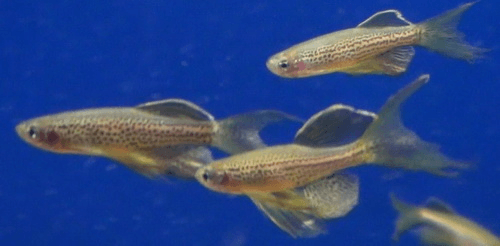
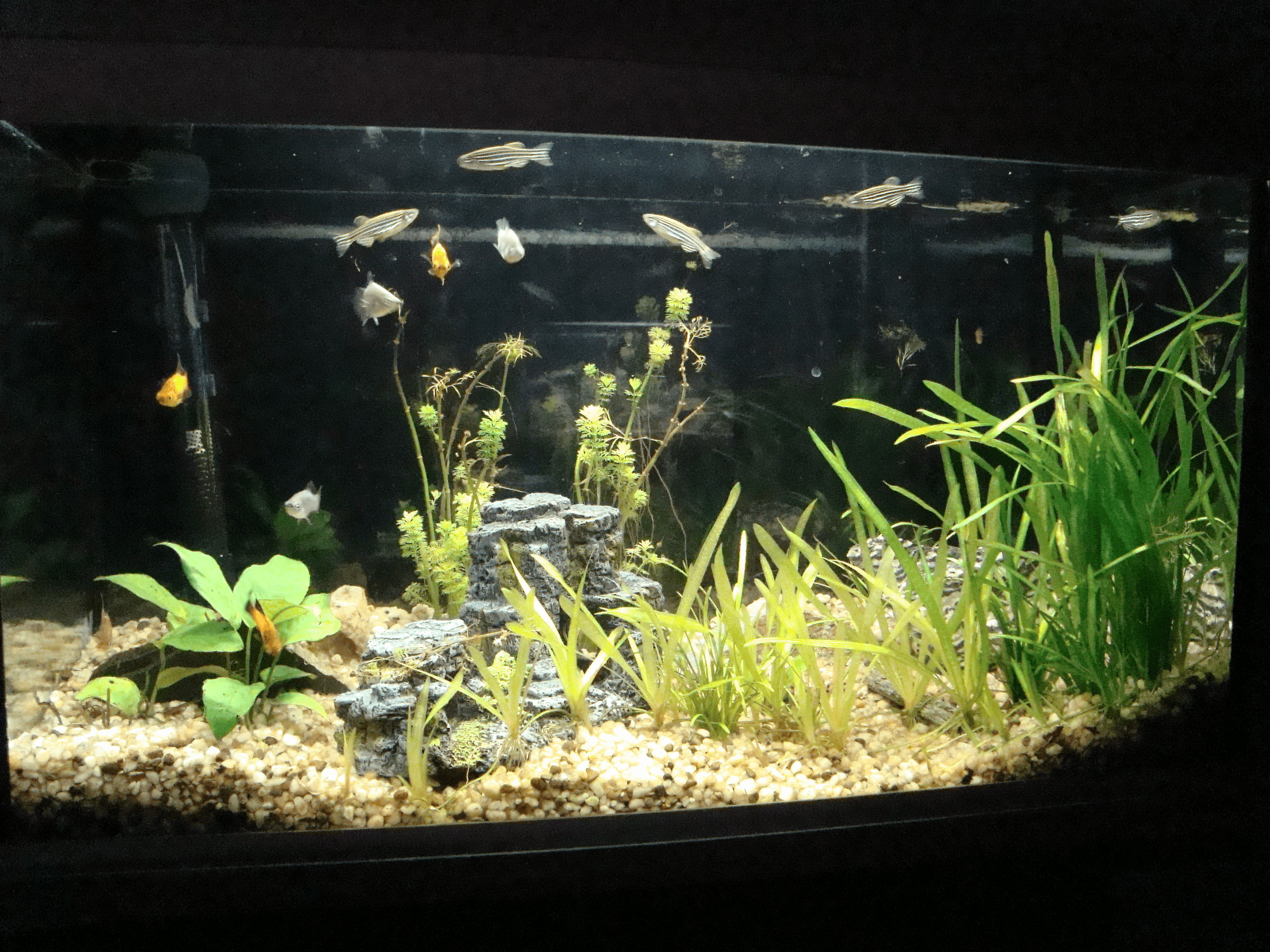
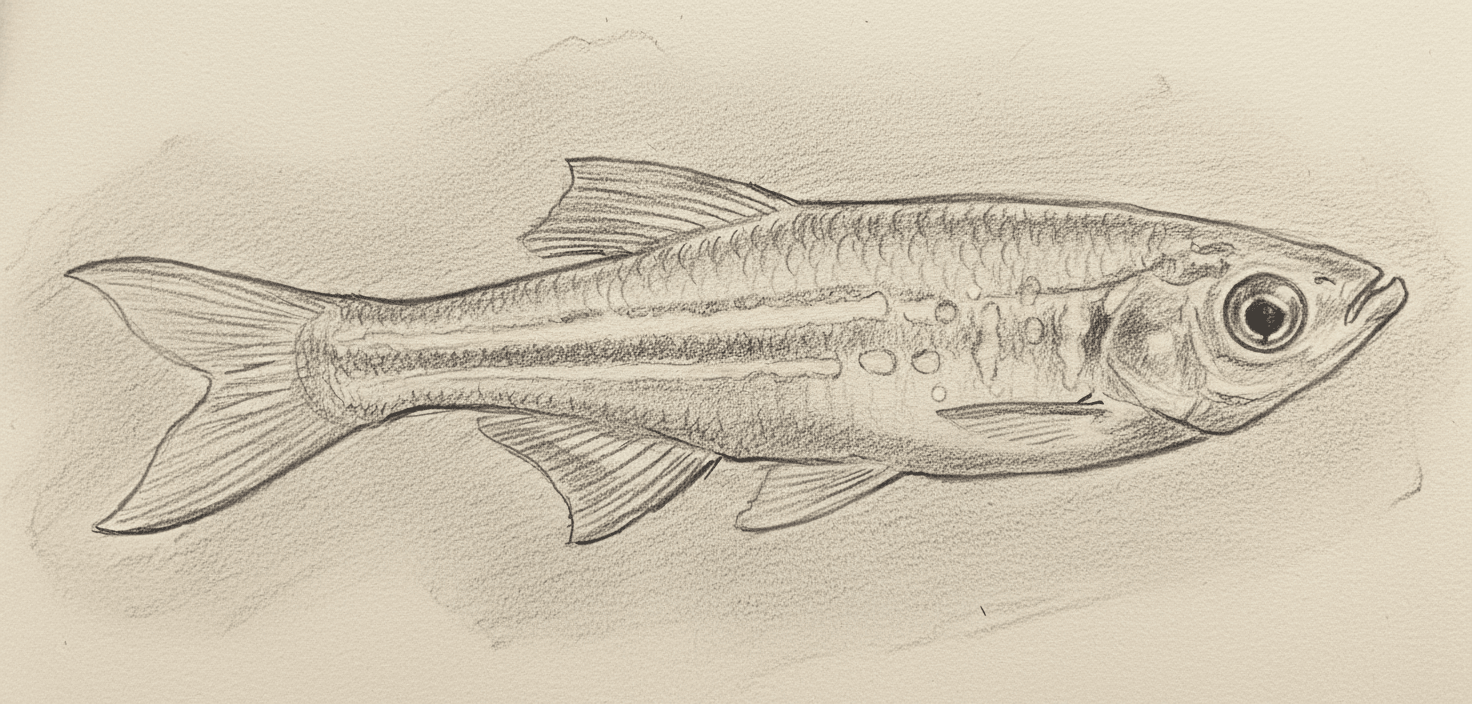
One of the most popular choices for beginners is the Peaceful Community Tank. This type of setup is a harmonious blend of small, compatible species from various regions that coexist without conflict. Ideally suited to a 20-30 gallon tank, this community is a vibrant collage of top dwellers like Harlequin Rasboras or Neon Tetras, mid-level swimmers like Corydoras Catfish, and centerpiece fish like a pair of Honey Gouramis or a single Dwarf Gourami. Also, adding a clean-up crew of Nerite Snails can help to maintain the tank's cleanliness. The visual diversity, natural behavior, and beginner-friendly species that such a setup offers are its biggest advantages. However, the challenges lie in the extensive research required to understand the varied requirements of different species, their dietary preferences, and lifespans. Therefore, it's advised to stock the tank gradually over 4-6 weeks, starting with the hardiest species.
For those with limited space or a desire for a more minimalist aesthetic, a Nano Tank is a viable option. This small-volume aquarium (5-10 gallons) houses carefully selected nano species and is a testament to the adage that "less is more". While the initial cost and space-efficiency of a Nano Tank are appealing, maintaining it requires careful monitoring and regular maintenance, including non-negotiable weekly water changes. The limited stocking options, rapid fluctuation of water parameters, and the unforgiving nature of small volumes are challenges that need to be managed. Despite marketing claims, it's important to note that most 5-gallon tanks are only suitable for a single Betta, a shrimp colony, or snails.
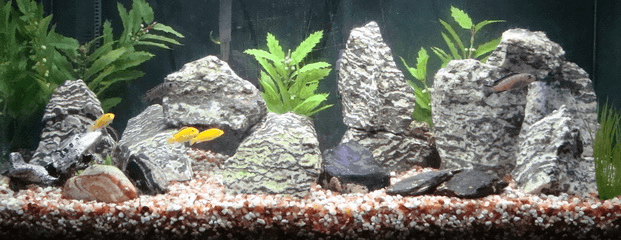
For beginners who are not afraid to experiment and are attracted to vibrant, interactive fish, a Species-Specific Tank with African Rift Lake cichlids could be an exciting choice. These extremely hardy and personality-packed species are tolerant of water chemistry fluctuations and are less susceptible to common diseases. However, their tanks require specific setup requirements and high filtration due to their messy eating habits. African cichlids setups can be divided into two types: a Lake Malawi Mbuna Tank, which requires a larger space of 40+ gallons and a high stocking to reduce aggression, and a Shell-Dweller Tank, which is smaller and more manageable, with fascinating breeding behavior.
Each of these approaches to setting up your first aquarium offers unique advantages and challenges. The choice between a peaceful community, a compact nano tank, or a specialized African cichlid setup depends largely on your personal preferences, the space available, and the amount of time and effort you're willing to invest in your new hobby. No matter which path you choose, the reward is a vibrant, living ecosystem that you have created and nurtured—a testament to the wonder of aquatic life. |
 |
The Large Community System– Going Big For The Best Beginner Experience |
For those ready to make a serious commitment to the aquarium hobby, a large community system of 55 gallons or more offers an unparalleled entry point into fishkeeping. While it may seem counterintuitive that a bigger tank would be better for beginners, the reality is that larger volumes of water create a more stable and forgiving environment that can weather the inevitable learning curve every new aquarist faces.
A well-stocked 55-gallon community tank is a spectacular display that can accommodate a diverse collection of species. Imagine a thriving ecosystem with 10-12 active Tiger Barbs darting through the mid-levels, complemented by 8-10 calmer Cherry Barbs adding splashes of red. Along the bottom, 6-8 Corydoras Catfish of the larger varieties like Bronze or Emerald busily sift through the substrate, while 2-3 graceful Angelfish command attention as they mature into your tank's centerpiece species. A single Bristlenose Pleco rounds out the community, helping to keep algae under control while adding its own unique character to the tank.
The beauty of a larger system lies in its inherent stability. Water parameters in a 55-gallon tank change very slowly, giving you ample time to notice and correct any issues before they become critical. This built-in forgiveness means that missing a day of feeding or being a day late on a water change won't spell disaster for your fish. The larger volume also provides superior biological filtration thanks to increased filter media capacity, and it offers the stocking flexibility that allows you to grow both your skills and your fish selection as you become more experienced. Perhaps most importantly, a well-aquascaped 55-gallon tank becomes a true showpiece in your home—a conversation starter and a source of daily enjoyment.
The advantages of larger tanks extend beyond just stability. The water chemistry remains consistent, temperature fluctuates minimally even in rooms with varying climate control, and weekly maintenance becomes more forgiving. You can house larger and more interesting species that simply wouldn't thrive in smaller environments, and from a financial perspective, investing in a properly-sized tank from the beginning offers the best long-term value. You won't outgrow it quickly, avoiding the common scenario where hobbyists find themselves upgrading within their first year.
Of course, a large community system does come with its own set of challenges that must be honestly considered. The initial investment is significant, typically ranging from $400 to $700 or more for a complete setup. A filled 55-gallon tank weighs between 600 and 700 pounds, requiring not just dedicated space but also furniture or a stand capable of supporting that substantial weight. Electricity costs will be higher than smaller tanks, and while you'll be changing more water in terms of volume, the frequency is less critical than with smaller systems. Additionally, if you're someone who moves frequently, transporting a large aquarium is considerably more challenging than relocating a smaller setup.
Let's be honest about larger tanks: the 55-gallon size is often considered the sweet spot for serious beginners. While it does cost more upfront, the stability and options it provides make the hobby significantly more enjoyable and rewarding. Many aquarists who start small with 10-gallon tanks find themselves upgrading within a year, essentially paying for two setups when they could have started with the right size from the beginning.
Making Your Final Choice
When deciding which type of aquarium community is right for you, consider your goals and circumstances carefully. A peaceful community tank is ideal if you want variety and genuinely enjoy researching different species and their compatibility. The nano tank route makes sense only if space or budget is extremely limited, and importantly, only if you're truly prepared for meticulous, exacting maintenance. A species-specific setup featuring African cichlids is perfect for those who want bold, interactive fish with personality and don't mind unconventional aquascaping approaches. Finally, a large community system is the right choice if you're genuinely committed to the hobby, have the necessary space, and want the most forgiving learning environment possible.
The Universal Beginner Rule
Regardless of which path you ultimately choose, remember this fundamental principle: stock slowly, research thoroughly, and never impulse-buy fish. Your first three months in the hobby should focus primarily on establishing stable water conditions and mastering basic maintenance routines, not on collecting every species that catches your eye during visits to the fish store. Patience during this initial period will pay dividends in the form of a healthy, thriving aquarium that brings you years of enjoyment. The fish will still be available once your tank is truly ready for them, but rushing the process is one of the most common mistakes that leads to frustration and failure in this wonderful hobby. |
Plants or Plastic? Finding Your Aquarium Balance |
One of the most common questions facing new aquarists is whether to use live plants or stick with artificial decorations. It's a decision that impacts not just the aesthetics of your tank, but also its maintenance requirements, biological balance, and your overall enjoyment of the hobby. The truth is, there's no one-size-fits-all answer, and understanding the advantages and challenges of each approach will help you make the best choice for your specific situation.
The Living Aquarium: The Case for Live Plants
Live plants offer numerous benefits that extend far beyond visual appeal. They serve as natural filtration systems, actively absorbing ammonia, nitrites, and nitrates—the waste products produced by your fish. During daylight hours, plants produce oxygen, contributing to a healthier environment for your aquatic inhabitants. They also compete with algae for nutrients, helping to keep unwanted growth under control. Perhaps most importantly, live plants provide a natural setting that helps fish feel secure and encourages them to display their natural behaviors. A thriving planted tank offers biological stability by buffering pH levels and providing additional surface area for beneficial bacteria to colonize.
However, live plants do come with their own set of challenges. They require appropriate lighting, and unfortunately, most starter kit lights are inadequate for plant growth. Depending on the species you choose, plants may need regular fertilization and even CO2 supplementation. They require routine pruning and maintenance, and if conditions aren't suitable, they can die and decay, actually creating water quality issues rather than solving them. There's an initial learning curve involved, and certain fish species will simply destroy plants no matter how carefully you tend them.
From a financial perspective, getting started with live plants typically requires an investment of $30 to $60 for a basic plant package. If your existing lighting isn't sufficient, you may need to spend an additional $50 to $150 on better fixtures. Initial fertilizer purchases run $15 to $30, and if you want to upgrade your substrate to something more plant-friendly, that's another $30 to $60.
The Practical Alternative: Artificial Plants
Artificial plants offer a completely different set of advantages, starting with zero maintenance beyond occasional cleaning. There's no pruning, fertilizing, or worrying about whether plants are thriving or dying. Your tank looks complete from day one, with no waiting period for growth. Artificial decorations work perfectly with any lighting setup, including the basic LED fixtures that come with most starter kits. They're ideal for tanks housing plant-eating fish like cichlids or goldfish, and because they don't decay, they'll never pollute your water. The costs are predictable and one-time, with no ongoing expenses for fertilizers or replacements.
The trade-offs are equally clear. Artificial plants provide no biological filtration benefits, no oxygenation, and don't contribute to the overall ecosystem balance of your aquarium. They can accumulate algae on their surfaces, requiring periodic removal and cleaning. While the quality of artificial plants has improved dramatically in recent years, they may still look less natural than living vegetation. Additionally, their nooks and crannies can harbor debris that needs to be cleaned out during maintenance.
For a typical 20-gallon tank, expect to spend $40 to $100 on quality artificial plants. Individual silk plants range from $8 to $15 each, while plastic varieties cost $4 to $10 apiece.
Starting with Live Plants: The Beginner's Toolkit
If you're intrigued by the idea of live plants, there are several nearly indestructible species perfect for beginners. Anubias, in any of its varieties, tops the list of impossible-to-kill plants. It requires low light, grows slowly, and needs almost no maintenance beyond ensuring you don't bury its rhizome when attaching it to rocks or driftwood. At $6 to $12 per plant, it's an affordable way to add living elements to your tank.
Java Fern is equally hardy, thriving in low light and tolerating a wide range of water conditions. Like Anubias, it should be attached to hardscape rather than planted in substrate, and costs $5 to $10 per plant. Java Moss, priced at $5 to $8 per portion, grows in almost any condition and provides excellent cover for fish and fry. Simply tie it to surfaces and trim occasionally as needed.
For those ready to take a small step further, the "easy" tier includes plants that are still very beginner-appropriate but offer more dramatic visual impact. Amazon Sword makes a beautiful centerpiece plant, establishing itself well in substrate with the help of root tabs. Cryptocoryne comes in various species with diverse colors and sizes, all quite hardy once they're settled and left undisturbed. Water Sprite grows quickly and can either float or be planted, making it excellent for water quality while being easy to propagate. These plants range from $4 to $12 each.
The Hybrid Approach: The Best of Both Worlds
For most new aquarists, I recommend a hybrid strategy that combines the instant visual appeal of artificial plants with the biological benefits of a few hardy live species. This approach builds success into your design from the very beginning.
For a 20-gallon tank, start with a foundation of artificial decorations: one or two large silk plants for the background ($20-$30), several plastic plants for the mid-ground area ($15-$25), and some driftwood or rock decorations ($20-$40). Then add living elements strategically: a single Amazon Sword as a centerpiece ($7), two or three Anubias attached to the driftwood ($20), and a portion of Java Moss on rocks ($7). Your total investment in live plants is only about $34, and you get the benefits of both approaches.
This hybrid setup works beautifully because the artificial plants provide immediate visual structure while the live plants offer biological benefits without overwhelming you with maintenance requirements. As you gain confidence, you can gradually add more live plants, and if some of them struggle, your tank still looks complete and attractive. The setup is easy to maintain with weekly water changes and requires no special lighting or CO2 injection.
Making the Right Choice for Your Situation
Choose an all-artificial approach if you're keeping plant-destructive fish like many cichlids or goldfish, if your budget is extremely tight, or if you simply have no interest in plant care. If you're uncertain about your long-term commitment to the hobby or if your available lighting is very poor, artificial plants are a sensible choice. There's absolutely no shame in using quality artificial plants—a well-maintained aquarium with artificial decorations is far superior to a planted tank where vegetation is dying and rotting.
Conversely, go fully planted if you enjoy gardening and want that element in your aquarium keeping. Some species, particularly shy tetras and shrimp, genuinely need heavy planting to thrive. If you're willing to invest in proper lighting and you understand the nitrogen cycle well enough to supplement it with plants, a fully planted tank can be deeply rewarding. Breeding setups particularly benefit from live plants, which provide security and food for fry.
Be aware, though, that a successful planted tank often becomes its own hobby within the hobby. Many aquarists find themselves becoming as interested in growing plants as in keeping fish, which can be wonderful if that appeals to you, but overwhelming if it doesn't.
The Maintenance Reality
The time commitment for each approach differs significantly. With artificial plants, you'll need to remove them every couple of weeks and scrub off any accumulated algae in the sink, then check monthly for damage or fading. This amounts to about 15-20 minutes of work per month. Live plants require weekly removal of dead leaves and pruning of overgrowth, bi-weekly fertilization if needed, and monthly thinning of fast-growers and replacement of any failures. Expect to spend 20-30 minutes weekly on plant maintenance.
The Lighting Consideration
Your lighting needs depend entirely on your chosen approach. For artificial plants only, the basic LED included in most starter kits works perfectly fine. Its purpose is simply to display your fish and establish a day-night cycle, requiring no additional investment. For easy live plants like Anubias, Java Fern, and Crypts, you'll need a low-to-medium PAR LED fixture running 6-8 hours daily. This may cost nothing extra if your kit light is adequate, or up to $75 if you need an upgrade. For demanding planted tanks with high-light species, you're looking at high-PAR full-spectrum LED fixtures running 8-10 hours daily with possible CO2 injection, costing $100-$300 or more. This level is not recommended for beginners.
My Recommendation for New Aquarists
For your first aquarium, especially if you're setting it up during the Christmas season, I strongly suggest the hybrid approach with roughly 70% artificial and 30% easy live plants. This combination gives you immediate visual appeal, biological benefits from the living elements, a low learning curve, and the flexibility to transition in either direction as you gain experience. Success is built into the design from the start.
As you become more experienced, you can gradually shift the balance based on what you discover you enjoy most. Some aquarists fall in love with the plant-growing aspect and eventually convert to fully planted tanks. Others find they prefer the simplicity of artificial decorations and make that transition instead. Both paths are completely valid.
The key during those critical first months is starting with a manageable setup that won't overwhelm you while you're learning the basics of water chemistry, fish behavior, and maintenance routines. Remember this fundamental truth: the best aquarium is the one you'll maintain consistently. Choose the approach that matches your interest level, available time, and budget. Your fish will thrive just as happily in a well-maintained artificial environment as they will in a planted one. |
Secret Little Hack |
Adding Indian Almond leaves to your aquarium can help create a more natural environment and improve water quality for your freshwater tropical fish. |
Quick Tips for Christmas Gift Planning |
Timeline Consideration: Remember that aquariums need to be set up 4-6 weeks before adding fish to allow the nitrogen cycle to establish properly. If you're giving an aquarium as a Christmas gift, consider presenting a "setup certificate" that can be redeemed after the holidays when there's adequate time to cycle the tank properly.
Gift Presentation Tip: Rather than presenting a tank that can't be used immediately, consider giving a beautiful coffee table book about aquariums along with a gift certificate for equipment. This allows the recipient to enjoy researching their new hobby while the practical aspects are handled appropriately.
Support System: One of the most valuable gifts you can include is the gift of your time. Offer to help with the initial setup and make yourself available for questions during the critical first months. Your experience and support can make the difference between success and frustration.
Local Fish Store: Do some research and recommend a quality local fish store where the recipient can get ongoing advice and support. Building a relationship with knowledgeable staff at a good fish store is invaluable for new aquarists, and pointing them in the right direction is a gift that keeps giving long after the holidays are over.
Disclaimer: Prices mentioned are estimates based on US markets as of 2024 and may vary by location and retailer. Always research specific species requirements before purchasing. |
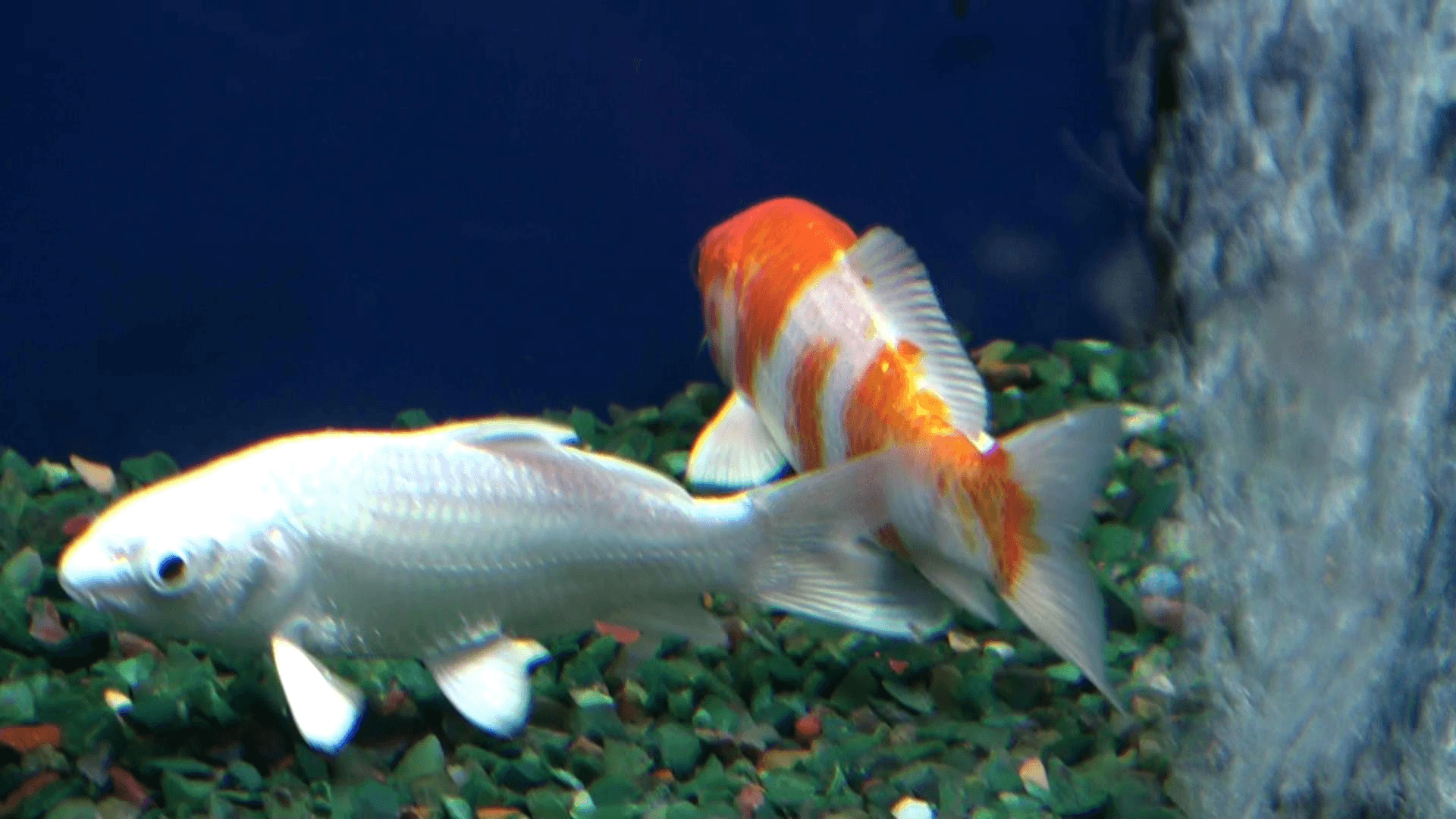
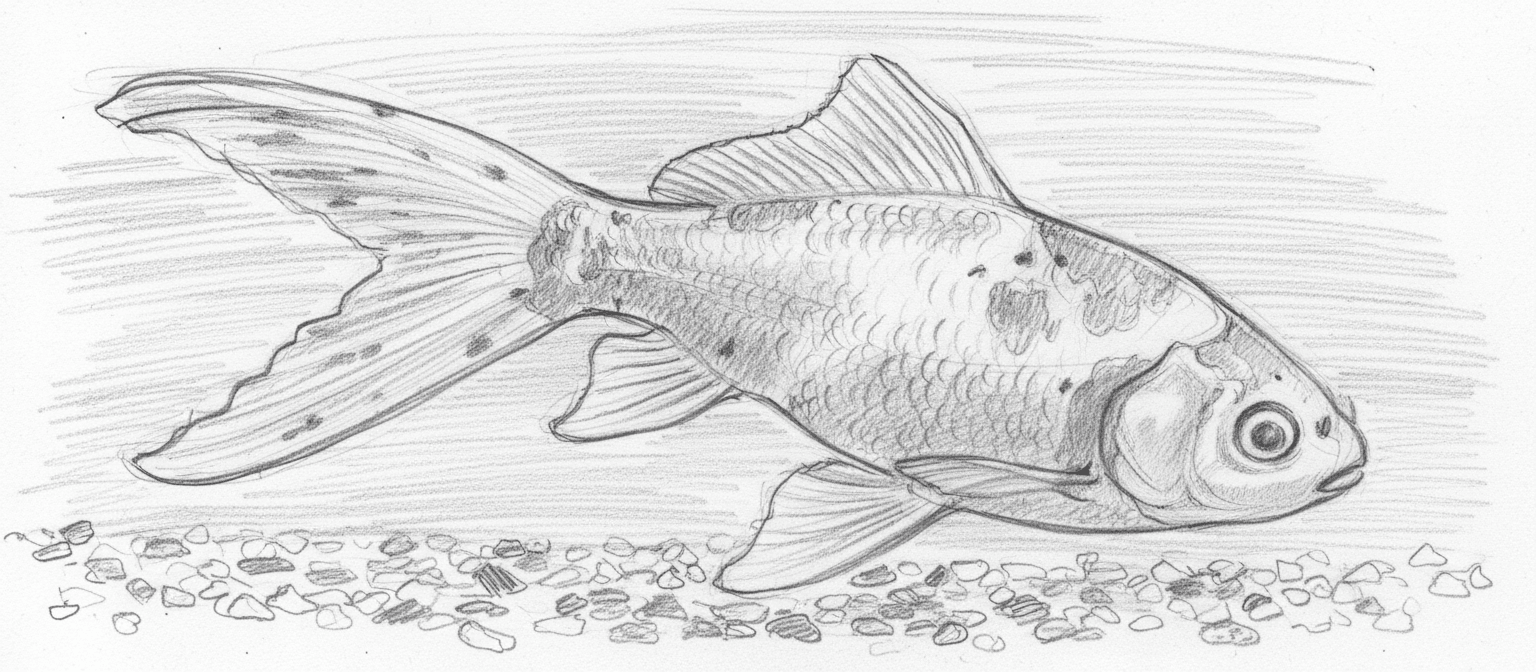
💡 Answer to Trivia Question: Koi (Nishikigoi)
The koi fish is widely considered the most popular fish associated with good luck worldwide. These colorful carp originated in Japan and China and carry deep symbolic meaning:
Why Koi Symbolize Good Luck:
- Perseverance & Strength - They swim upstream against currents - Prosperity & Success - Especially in business - Longevity - Can live 50+ years - Transformation - Based on legends of koi becoming dragons
Cultural Significance:
- East Asian cultures keep koi in ponds for fortune and harmony - Feng shui uses koi to attract wealth and positive energy - Different colors carry specific meanings (gold = prosperity, red = love, black = overcoming obstacles) |
 |
 |
 |