
November 19, 2025 |
 |
Founder's Message |
 |
Deciding what fish you want to keep |
The thrill of keeping fish is that you can build any type of community with all sorts of different characters. The most common beginning aquarium is a small passive community tank full of small active fish that live peacefully together. But there are so many other types of tank that can be create, larger passive tanks, aggressive combinations, highly colorful living pictures, constantly active tanks that always are in flux.
Before you think of starting an aquarium, take a few minutes to consider what type you want in the future. Do you want a passive soothing tank to drop stress as you watch it, or do you want an active tank full of Lake Malawi African mouthbrooders that are constantly active fish in rainbow colors that create multi generational tanks with all sorts of different sizes as fry, juveniles, young adults and breeding pairs all inhabit the same habitat.
Salt Water Aquariums First of all, I don't recommend trying a marine aquarium in the beginning. Marine tanks require a lot more knowledge of water chemistry and the interdependence of species than most novices are able to provide. Beside that, the costs for marine environments are much higher as they require the very best equipment possible. My personal limit on a marine system is a minimum of 33 gallons, often way too costly for a person who is just seeing if they like the hobby. Often a single specimen for the tank costs more than a beginner freshwater system, and they are much more prone to problems than most freshwater tropical fish.
The Community aquarium The most common aquarium people tart with is the small community aquarium where there are often inexpensive tank kits available that provide almost everything required to get started with a small tank and an active collection of fish. By far, this is where the most expertise in live fish stores is available. Rely on their expertise to select a beginning set of fish to both weather the maturation cycle of a biological filter before adding an excessive number of fish.
Breeding aquarium While most beginners are satisfied with smaller habitat and a collection of fish that are unrelated, there are those who want to try the exercise of breeding a particular species of fish. As a first tank I do not recommend this as there should be some careful study of any species you want to breed, to know even if the species can be tank bred! Often though, the first aquarium that starts out as a small community aquarium is retired as the fascination of the hobby grows and you find that your tastes have changed to other types of fish tank.
Don't discard the small tank, it is often perfect for breeding a specific species and can also act as either a fry grow out tank or emergency hospital tank if a disease should inadvertently be introduced.
African Aquariums African species tanks are one of the nicest tanks I have ever kept. My personal favorite since they combine the colors of many saltwater aquariums with a breeding style that lends itself easily to multi-generational communities.
For me, the tanks I keep are generally of the mouthbrooders of Lake Malawi exclusively. There are three rift lakes in Africa, Lake Tanganyika, Lake Victoria and Lake Malawi. The two other lakes have a much wider distribution of more standard breeding style of claiming territory and defending it to the death. Lake Malawi has developed a different style of brooding fry, the pair finds a suitable place to spawn and then the female takes the fertilized eggs into her mouth for three weeks or more as the fry grow out in her mouth. She does not eat for that entire time.
After the fry can swim somewhat, she will take them to a place to feed outside her mouth while she stands guard and hurry back to her safe mouth should danger appear. After a suitable brooding time, the fry are finally expelled into a safe place and the fry are then on their own. This leads to multi generational community. Generation after generation grow together with a wide variety of sizes. The other small advantage is that African Cichlids can end up in heavily populated aquariums that cause no problems.
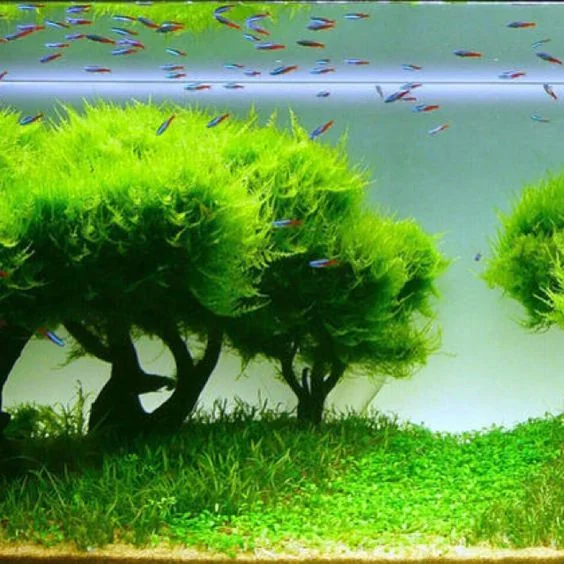
Aquascapes One last aquarium that many new aquarists select as their first aquarium as they look for something "totally different" and build a small tank that houses different animals like shrimp and tiny fish. In the beginning the tanks are a bit more difficult to establish and mature the biological filter.
The one big advantage for an aquascapes or Nano tank is the fact that they usually uses a wide variety of green plants. These are a valuable addition to the living habitat that the fish and invertebrates live in. Besides providing protection and hiding places, the plats can furnish a little nutrition, but more importantly will remove the final by=product of the nitrogen cycle - nitrate that can build up in enough concentrations that can harm fish. They naturally remove wastes and can keep the tank cleaner than when plants are not used. |
Quote Of The Day |
"Life is better with a tank full of colorful fish." |

Emperor Tetra - Nematobrycon palmeri |
Taxonomy and Native Distribution
The Emperor Tetra (Nematobrycon palmeri) is a stunning freshwater fish species belonging to the family Characidae, first described by Eigenmann in 1911. This captivating species is endemic to the Pacific slope river systems of western Colombia, specifically inhabiting the San Juan and Atrato River basins, where it occupies slow-moving streams, tributaries, and heavily vegetated areas with dense canopy cover that creates shaded, dimly-lit aquatic environments.
Physical Characteristics and Sexual Dimorphism
Adult Emperor Tetras typically reach a maximum size of approximately 5 centimeters (2 inches) in length, with males generally growing slightly larger than females. The species exhibits remarkable sexual dimorphism that becomes increasingly pronounced as the fish mature. Males display an elongated, ornate caudal fin with extended central rays forming a characteristic trident or spear-like projection, while females possess shorter, more rounded tail fins.
The body coloration is truly spectacular, featuring a base color of brown to tan with a prominent horizontal stripe running from the eye to the caudal peduncle that shifts between dark brown, black, and iridescent blue-violet depending on lighting conditions and the fish's mood. Males typically show more intense coloration, particularly during courtship displays, with their eyes featuring a distinctive bright blue-green iridescence in the upper portion. The adipose fin, characteristic of characins, is present and often displays a subtle orange to yellow hue.
Water Parameters and Natural Habitat Conditions
In their natural habitat, Emperor Tetras inhabit waters with specific parameters that should be replicated in captivity for optimal health. They prefer soft to moderately hard water with a pH range of 5.0 to 7.8, though they thrive best in slightly acidic conditions between 6.0 and 7.0. Water temperature should be maintained between 23 to 27 degrees Celsius (73 to 81 degrees Fahrenheit), with 25 degrees Celsius being ideal.
These fish originate from well-oxygenated waters with minimal current, typically found under dense vegetation where tannins from decaying organic matter create tea-colored water conditions. Water hardness should range from 3 to 8 dGH, though they can adapt to slightly harder water in captivity.
Diet and Feeding Requirements
The Emperor Tetra is primarily an omnivore with carnivorous tendencies in the wild, feeding on small insects, insect larvae, worms, crustaceans, and various zooplankton, supplemented occasionally with plant matter and algae. In aquarium settings, they readily accept a varied diet including high-quality micro pellets, tropical flakes, frozen foods such as bloodworms, daphnia, and brine shrimp, as well as live foods when available.
For optimal coloration and health, a diverse diet should be provided, with feedings occurring once or twice daily in portions that can be consumed within two to three minutes. The species exhibits mid-water feeding behavior, though they will occasionally take food from the surface or forage along the substrate.
Behavior and Social Structure
Behaviorally, Emperor Tetras are generally peaceful and relatively calm compared to more active tetra species, making them excellent candidates for community aquariums. They are shoaling fish that should be kept in groups of at least six individuals, though groups of ten or more are preferable to encourage natural behavior and reduce stress. In proper group sizes, a fascinating social hierarchy develops with dominant males establishing territories and displaying to both rivals and females.
While males may occasionally spar with one another through displays of fin spreading and parallel swimming, these interactions rarely result in physical damage. The species occupies the middle water column primarily, swimming with a graceful, almost regal bearing that inspired their common name. They are most active during dawn and dusk periods, reflecting their crepuscular nature in the wild.
Breeding and Reproduction
For breeding, Emperor Tetras are egg scatterers that can be bred in captivity with proper conditioning and setup. Sexual maturity is reached at approximately six to eight months of age. Males become more territorial and intensely colored during breeding periods, performing elaborate courtship displays that include fin spreading, body quivering, and circular swimming patterns around females.
Breeding is best achieved in a separate breeding tank of at least 40 liters (10 gallons) with very soft, acidic water (pH 6.0-6.5, hardness below 4 dGH), dim lighting, and fine-leaved plants or spawning mops to catch the eggs. The temperature should be raised slightly to 26-27 degrees Celsius. After an elaborate courtship dance, the female deposits adhesive eggs among plants, with spawning typically occurring in the early morning hours.
A single spawning event may produce 50 to 200 eggs. Parents do not exhibit parental care and will readily consume their own eggs, so adults should be removed immediately after spawning. Eggs hatch within 24 to 36 hours, and fry become free-swimming after approximately three to four days, at which point they require infusoria or commercially prepared fry food, graduating to baby brine shrimp as they grow.
Aquarium Setup and Requirements
The ideal aquarium setup for Emperor Tetras should be at least 75 liters (20 gallons) for a small group, though larger tanks of 110 liters (30 gallons) or more are preferable for communities. The aquarium should feature plenty of planted areas using species such as Amazon swords, Java fern, Cryptocorynes, and floating plants to diffuse lighting and create shaded zones.
Driftwood and dried leaf litter (such as Indian almond leaves or oak leaves) will help replicate natural conditions while releasing beneficial tannins that condition the water and provide a more natural appearance. A dark substrate of fine sand or small gravel will help reduce stress and enhance the fish's coloration. Water flow should be gentle, achieved through a sponge filter or a canister filter with the output diffused. Open swimming areas should be provided in the center of the aquarium while maintaining densely planted perimeter zones for security.
Compatible Tankmates
Emperor Tetras are excellent community fish compatible with other peaceful species of similar size and temperament. Suitable tankmates include other small tetras such as Cardinal Tetras, Rummy-nose Tetras, and Lemon Tetras, as well as small rasboras, Corydoras catfish, Otocinclus, small peaceful dwarf cichlids like Apistogramma species, small gouramis, and freshwater shrimp such as Neocaridina species.
They should not be housed with aggressive species, large predatory fish, or fin-nipping species like Tiger Barbs or Serpae Tetras. Their calm demeanor also makes them unsuitable with overly boisterous species that may outcompete them for food or cause stress.
Health, Disease Prevention, and Lifespan
Regarding health and lifespan, Emperor Tetras are relatively hardy once established but can be sensitive to poor water quality and sudden parameter changes. They are susceptible to common freshwater fish diseases including Ich (white spot disease), fin rot, fungal infections, and bacterial infections, particularly when stressed or kept in suboptimal conditions. Regular water changes of 25 to 30 percent weekly, proper filtration, and stable water parameters are essential for disease prevention. New fish should always be quarantined for at least two weeks before introduction to the main aquarium. With proper care, Emperor Tetras can live five to six years in captivity, with some specimens reaching eight years under exceptional conditions.
Conservation Status and Availability
Conservation status for Nematobrycon palmeri has not been formally evaluated by the IUCN Red List, though habitat destruction and degradation in their limited native range pose potential threats to wild populations. The vast majority of Emperor Tetras in the aquarium trade are now captive-bred, reducing pressure on wild stocks while also producing hardier specimens better adapted to aquarium conditions. The species remains moderately popular in the aquarium hobby, prized by enthusiasts who appreciate their elegant appearance, peaceful nature, and the sexual dimorphism that adds interest to display tanks.
Suitability for Aquarists
The Emperor Tetra is an exceptionally beautiful and manageable species suitable for both intermediate and experienced aquarists willing to provide appropriate conditions. Their striking appearance, peaceful temperament, interesting social behaviors, and moderate care requirements make them a valuable addition to well-maintained community aquariums, where they serve as a centerpiece species that commands attention while coexisting harmoniously with other peaceful inhabitants.
When provided with soft, slightly acidic water, dim lighting, heavy planting, and a varied diet, these regal fish will display their full splendor and may even reward dedicated keepers with successful breeding attempts. |
Filtration Methods for Larger Aquariums |
Enter Description |
Trivia Question❓Which freshwater tropical fish is known for its ability to change color based on its mood and environment? Answer at the bottom of the newsletter |
 |
How can Indian Almond Leaves help my Aquarium? |
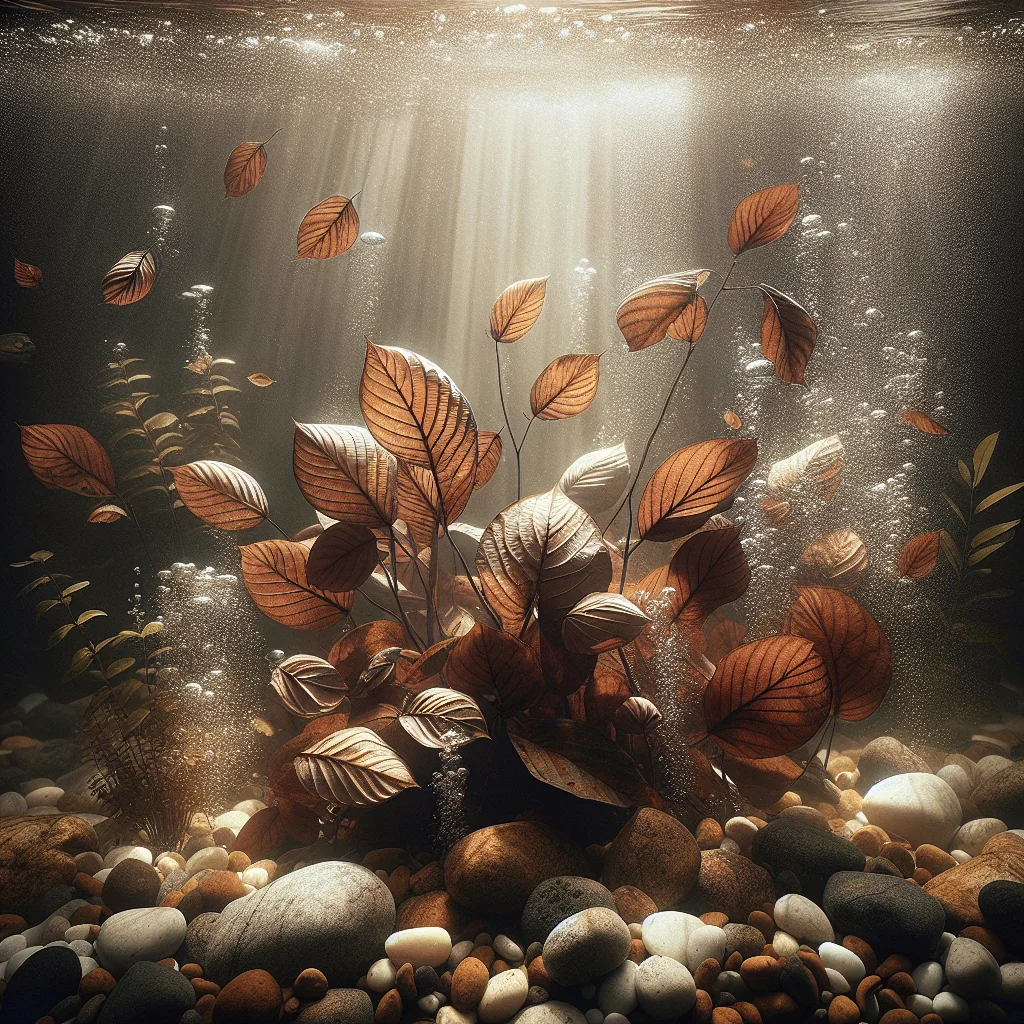
Indian Almond Leaves, also known as Catappa leaves, offer several valuable benefits for aquarium enthusiasts. These natural leaves release tannins that naturally acidify and soften water, lowering pH levels and reducing hardness to create ideal conditions for soft-water species. They produce what's known as "blackwater," which effectively mimics the natural habitats of many tropical fish species.
Beyond water chemistry, Indian Almond Leaves provide significant health benefits for aquarium inhabitants. They contain antimicrobial compounds that fight bacteria and fungi, helping to prevent infections and diseases. The tannins released into the water help reduce stress in fish by creating darker water conditions that make them feel more secure. These leaves may also support the healing process for wounds and fin damage, making them particularly beneficial for bettas and shrimp.
For aquarists interested in breeding, Indian Almond Leaves can encourage spawning behavior in many species, including bettas, tetras, and rasboras. The leaves also provide natural hiding spots for fry, giving young fish safe spaces as they develop. They're especially recommended for bettas, various South American and Asian species like tetras and rasboras, shrimp (particularly Caridina species), and larger fish such as discus and angelfish.
When using Indian Almond Leaves, add approximately one leaf per 10 gallons of water, though you can adjust this ratio based on your preferences. You can boil or soak the leaves first to speed up tannin release. Typically, leaves should be replaced when they've decomposed, which usually occurs after one to two weeks. If the water becomes too dark for your liking, simply remove some leaves. Keep in mind that these leaves will tint your water a brown or amber color—this is completely normal and beneficial for your fish, though it may not suit everyone's aesthetic preferences. |
Secret Little Hack |
Use Indian almond leaves in your aquarium to help with water conditions and provide hiding spots for your fish. |
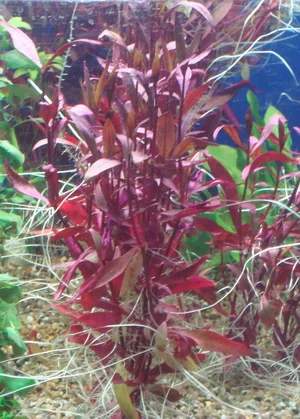 |
Adding Red Ludwigia to your aquarium instantly infuses it with vivid red hues and lush, eye-catching foliage.
This adaptable North American aquatic plant, also called Ludwigia repens, stands out for its bold leaf colors, creating dramatic contrast alongside typical greens.
High lighting and rich nutrients bring out the deepest reds, while optional CO2 injection fosters stronger, fuller growth.
With regular trimming, Red Ludwigia develops a denser, bushier shape and avoids smothering neighboring plants.
Propagation is simple—just take a stem cutting and plant it in your aquarium substrate.
Beyond stunning looks, Red Ludwigia supports a thriving aquatic ecosystem by absorbing extra nutrients and helping to prevent algae blooms.
For both new and experienced aquarists, this plant is an appealing, functional choice that enhances beauty and balance in your tank. Read More... |
 |
💡 Answer to Trivia Question: The Siamese fighting fish, also known as the betta fish. |