
The Five Essential Pieces of Aquarium Equipment Every Beginner Needs |
what you actually need versus what pet stores want to sell you |
When you walk into a pet store or browse online aquarium suppliers, the sheer volume of equipment available can be overwhelming. Filters, heaters, lights, air pumps, CO2 systems, UV sterilizers, protein skimmers, and dozens of other gadgets promise to make your aquarium better. But here is what 63 years of experience has taught me: most beginners need only five essential pieces of equipment to succeed.
1. A Properly Sized Filter
The filter is the heart of your aquarium. It removes physical debris, houses beneficial bacteria that convert toxic ammonia into safer compounds, and provides water circulation. For beginners, a hang-on-back power filter is the best choice. They are easy to maintain, reliable, and cost-effective.
Size your filter for at least double your tank's volume. A 20-gallon tank needs a filter rated for 40 gallons or more. This provides the biological filtration capacity needed to handle the waste your fish produce. Clean the filter media in tank water monthly, never tap water, to preserve the beneficial bacteria colony.
2. A Reliable Heater
Tropical fish require stable water temperatures between 75 and 80 degrees Fahrenheit. A submersible heater with a built-in thermostat is essential. Choose a heater rated for your tank size, and consider buying one slightly more powerful than recommended to handle temperature fluctuations.
Place the heater near the filter outlet so warm water circulates throughout the tank. Always use a thermometer to verify the temperature. Digital thermometers are inexpensive and far more accurate than the strip thermometers often included with starter kits.
3. Basic Water Testing Capability
You cannot manage what you cannot measure. A liquid test kit for ammonia, nitrite, and nitrate is non-negotiable. Test strips are convenient but less accurate. The API Freshwater Master Test Kit has been the standard for decades and provides reliable results.
Test your water weekly, especially during the first six weeks when the tank is cycling. Record your results. This data reveals problems before they become emergencies and helps you understand how your tank behaves.
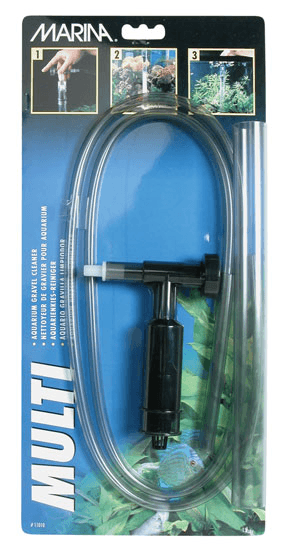
4. A Gravel Vacuum
Water changes are the single most important maintenance task for a healthy aquarium. A gravel vacuum makes this job efficient by removing debris from the substrate while siphoning out water. Weekly water changes of 25 to 30 percent remove accumulated waste and replenish essential minerals.
Choose a vacuum with a hand pump or squeeze bulb to start the siphon. The python-style water changers that connect to your faucet are convenient for larger tanks but unnecessary for beginners with small aquariums.
5. A Quality Fish Net
This seems basic, but a good fish net is essential. You will need it for removing dead plant matter, catching fish for tank moves or medication, and removing uneaten food. Buy a net larger than you think you need. A 6-inch net handles most community fish comfortably.
Soft, fine-mesh nets are gentler on fish scales and fins. Keep your net clean and dedicated to your aquarium to prevent introducing contaminants.
What You Do Not Need Yet
Air pumps, bubble wands, decorative ornaments, and elaborate lighting systems can wait. Focus on the essentials first. Master water chemistry, understand your filter's maintenance needs, and establish a routine before adding complexity.
The best aquarium equipment is the equipment you understand and maintain consistently. A simple setup run properly will always outperform a complex setup neglected. |
0 Comments
Join the conversation
Be the first to comment
Share your thoughts above.