
Community Tank Basics: Creating Peaceful Neighborhoods for Your Fish |
The secrets to keeping multiple species together without the drama |
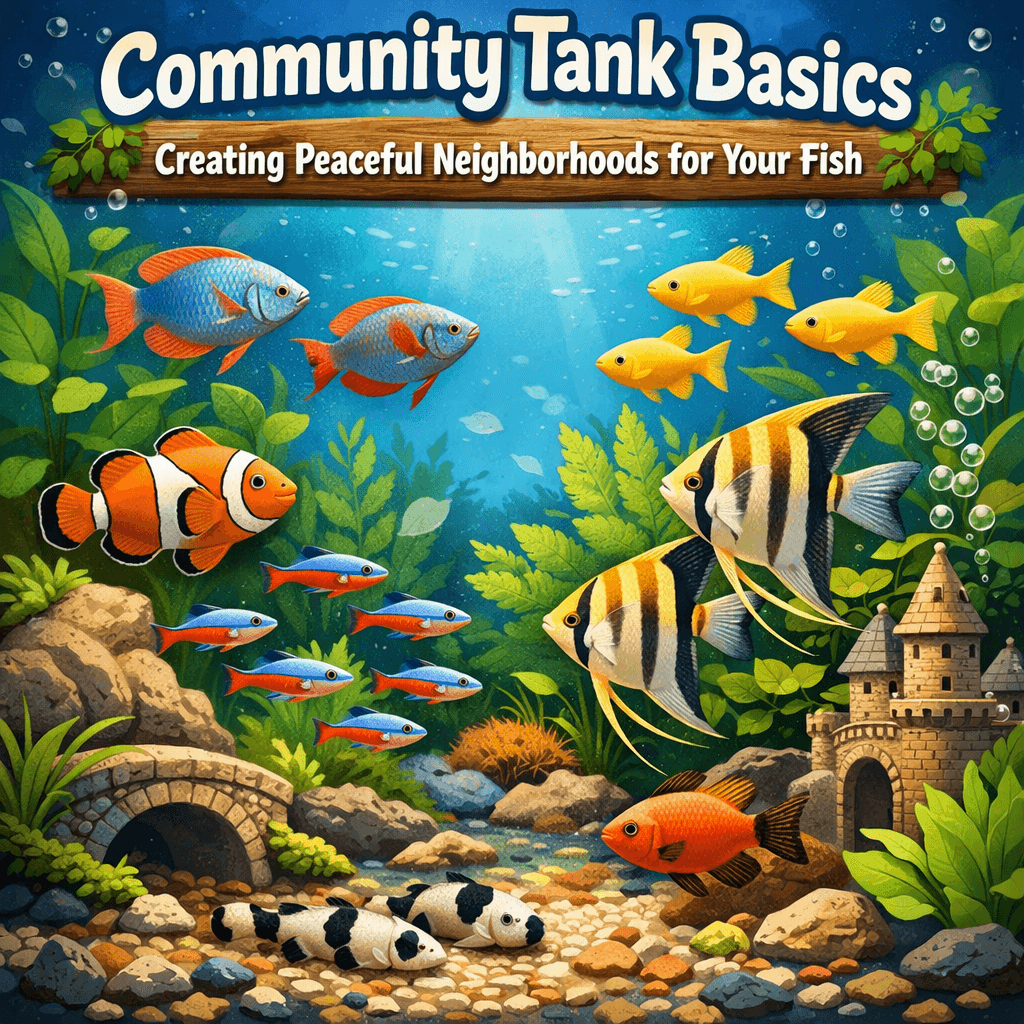
One of the most rewarding aspects of fishkeeping is creating a thriving community tank—a miniature underwater world where different species coexist peacefully. But throw the wrong fish together, and you'll witness aquatic warfare instead of harmony. Here's how to build a community tank that works.
Understanding Fish Personalities
Just like people, fish have personalities. Some are peaceful community players, others are territorial bullies, and some are shy wallflowers. The key to a successful community tank is matching compatible temperaments. Start by researching each species' behavior before adding them to your tank.
The Three Zones of Your Aquarium
Think of your tank in three layers. Top-dwelling fish like guppies and danios occupy the upper water column. Middle-dwellers such as tetras and platies swim in the center. Bottom-dwellers including corydoras and loaches patrol the substrate. A well-stocked community tank has representatives in all three zones, maximizing both space usage and visual interest.
Size Matters
The golden rule of community tanks: don't mix large fish with small enough fish to be eaten. Even peaceful species will snack on tankmates that fit in their mouths. As a general guideline, avoid size differences greater than 50%. If your largest fish is two inches, your smallest should be at least one inch.
Activity Levels
Match activity levels to prevent stress. Fast, active swimmers like danios can stress slower, more sedate fish like gouramis. Similarly, fin-nippers such as some barb species will harass long-finned fish like bettas or fancy guppies. Observe your fish's behavior and adjust accordingly.
Stocking Density
Overcrowding is the fastest way to destroy a community tank. Use the one-inch-per-gallon rule as a starting point, but remember it's a guideline, not law. Active swimmers need more space than sedentary species. When in doubt, understock rather than overstock—you can always add more fish later.
Feeding Strategies
Different fish feed at different levels and have different dietary needs. Fast swimmers often outcompete slower fish for food. Use a combination of floating flakes for top-dwellers, sinking pellets for bottom feeders, and target feeding with turkey basters or pipettes for shy or slow eaters.
Troubleshooting Aggression
If aggression appears, act quickly. Remove the bully to a quarantine tank or rearrange decorations to break up territories. Sometimes adding more fish of the same species reduces aggression by distributing it across the group. Never ignore ongoing aggression—it stresses all tank inhabitants and leads to disease.
My Favorite Combinations
For a 20-gallon beginner community tank, I recommend: six neon tetras, four platies, and four corydoras catfish. This gives you top, middle, and bottom dwellers, all peaceful species, and a beautiful display of color and activity. Add live plants for the perfect finishing touch. |
0 Comments
Join the conversation
Be the first to comment
Share your thoughts above.